


Learning to code is a rewarding activity for many. The ability to solve complex problems and create tools to help people in their daily lives are some of the reasons why people decide to pursue computer science and software engineering degrees.
However, the outlook for this career field is troubling to some students. More than 240,000 tech jobs were cut through layoffs in 2023. The trend is continuing into 2024, with about 25,000 layoffs happening in January at tech companies large and small in a variety of industries.
“The recent layoffs have been worrying,” says Ananya Bist, an international student at Arizona State University pursuing a master’s degree in computer science.
“I have a clear idea about the kind of work I want to do,” she says, “but I have realized that I need to be more flexible in the early stages to find my footing in the industry.”
Even as the job market has become increasingly competitive, students and new graduates still have plenty of opportunities to pursue their programming dreams with the right skills and a robust support network.
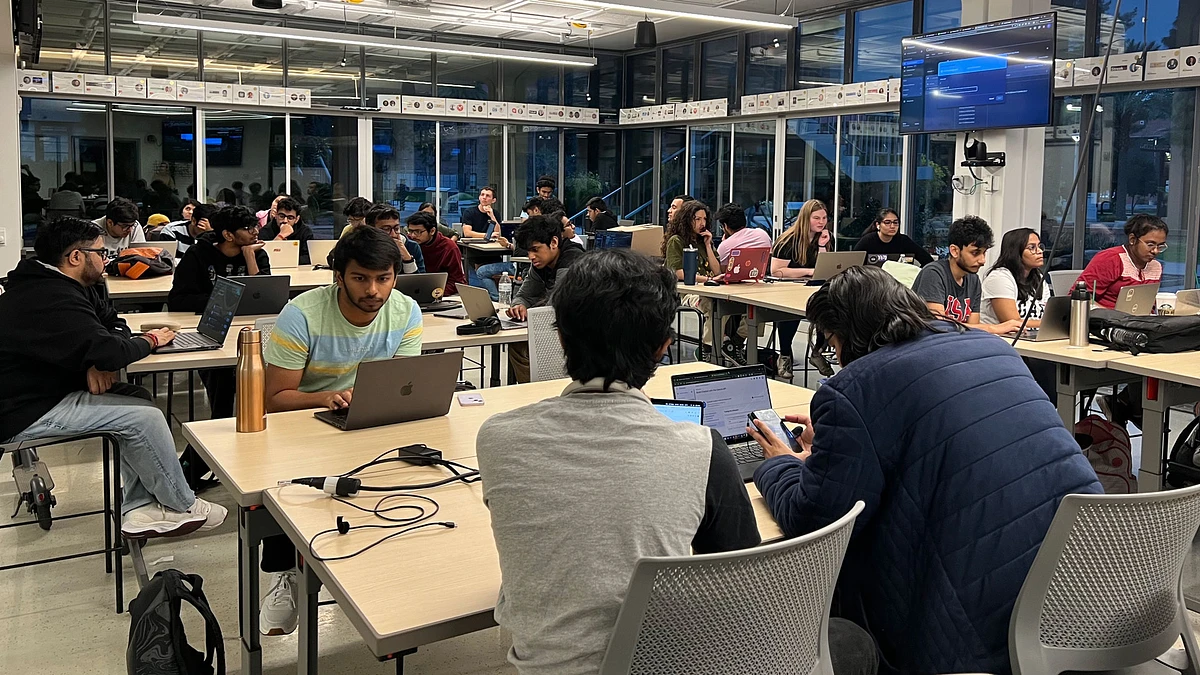
The Google Developer Student Club, a student organization in the Ira A. Fulton Schools of Engineering at ASU, has been a valuable resource for Bist and the university’s community of coding enthusiasts. The organization’s goal is to help students interested in topics from developing software for mobile apps to machine learning to generating new skills and making connections with their peers, alumni and industry professionals.
“We recognize the importance of preparing our members not just with technical skills, but also with the resilience and adaptability required in today’s dynamic job market,” says Arnav Aghav, a computer science student in the Accelerated Master’s degree program in the Fulton Schools and president of the ASU Google Developer Student Club.
About the ASU Google Developer Student Club
The Google Developer Student Club, known as GDSC, is part of a worldwide network of more than 2,100 groups supported by Google to empower students to learn to solve real challenges with technology.
ASU’s club was founded in 2019 by computer science alumni Ananay Arora, who is now working at an artificial intelligence and financial technology startup, and Andrew Hill, now a software engineer for Apple’s media applications engineering team.
Students from all backgrounds and majors who are interested in software development, emerging technologies and the desire to gain practical skills are welcome to join and be empowered with the knowledge they need to achieve their coding goals.
Computer science sophomore Aryan Keluskar was drawn to GDSC because of its focus on teaching skills relevant to industry, with some workshops being taught by alumni and professionals.
“I really like how the core team always goes the extra mile to make
their workshops seamless for all to comprehend, be it livestreaming the
event or making their code accessible to all,” Keluskar says. “I have
made really great friends and discovered people with similar interests
to potentially pursue projects together.”
Helping students prepare for software careers
One of GDSC’s primary activities at ASU is holding “bite-sized” software workshops to learn and practice modern software development skills. Topics have included Android, iOS and Google software ecosystem programming projects as well as data structures, algorithms and machine learning topics.
The workshops are designed to enable attendees to build something with help from the instructors and teaching assistants, collaborate to solve problems and go home with a project, Arora says.
Pavel Ryabov is a GDSC technical officer who plans the club’s workshops, prepares code and other materials, and helps students during the events. He says the ability to provide students with exciting new projects is “one of the crucial parts of GDSC’s workshops.”
“Our workshops aim to introduce students to cutting-edge technologies that are dominating in the industry and excite them by creating the initial project together,” says Ryabov, a computer science major. “We make sure to provide students with enough materials for them to successfully continue the adventure with this technology by suggesting how the current project can be enhanced and what should be done to achieve that.”
Arora and Aghav note that members often share their successes — such as winning a hackathon or landing an internship — after attending various workshops.
“We got mentions from students that they were able to apply this directly to their projects and competitions,” Aghav says, noting one participant even won an ASU Devils Invent design challenge based on a workshop that taught the Swift programming language for Apple devices.
“The participant attributed his victory to the practical skills and knowledge acquired during our iOS workshop, which enabled him to develop a standout application,” Aghav says.
This academic year, the club has expanded the workshop topics to help students build adaptable skills and take advantage of the full range of software engineering careers. One of those workshops focused on contributing to open source software.
“Open source software plays a crucial role in the tech project development process, so learning how to understand, use and benefit from it early in your career is very important,” Ryabov says. “Publicly available software that is well-built and is regularly maintained is a perfect ground for learning and understanding project structure, documentation and proper coding techniques.”
Ryabov says reverse-engineering this kind of software and studying Git repositories is more effective than only studying theory to learn the rules of programming.
“Our goal at GDSC is to introduce students to the practical part and motivate them to see how things work ‘under the hood’ by working with existing codebases,” he says.
Another opportunity Aghav has developed is a new series of industry speaker events. The first event, held in fall 2023, invited PayPal professionals Courtney Ngai, a senior software engineer and ASU computer science alumna, and Porter Casdorph, a PayPal tech talent sourcer and recruiter, to speak to about 100 students. Their talk focused on the technical projects happening at PayPal, internship tips, and recruiting and hiring practices.
“The speakers shared wonderful insights on how deep the hiring
practice goes, including how a hierarchy of factors is evaluated on a
candidate’s profile,” Aghav says. “It was a productive
career-prep-oriented workshop that gave insights into the point of view
of the recruiting side for students to sharpen their applications.”
Read more on Full Circle